AtodeRead
How to Sort Mail: Deadlines, Actions, Filing, and Disposal
Mail and flyers can quickly take over a table. You do not have to read everything immediately or throw it all away on arrival. Sort each item by its next action: a deadline, a reply or task, a reason to keep it, or no current use.
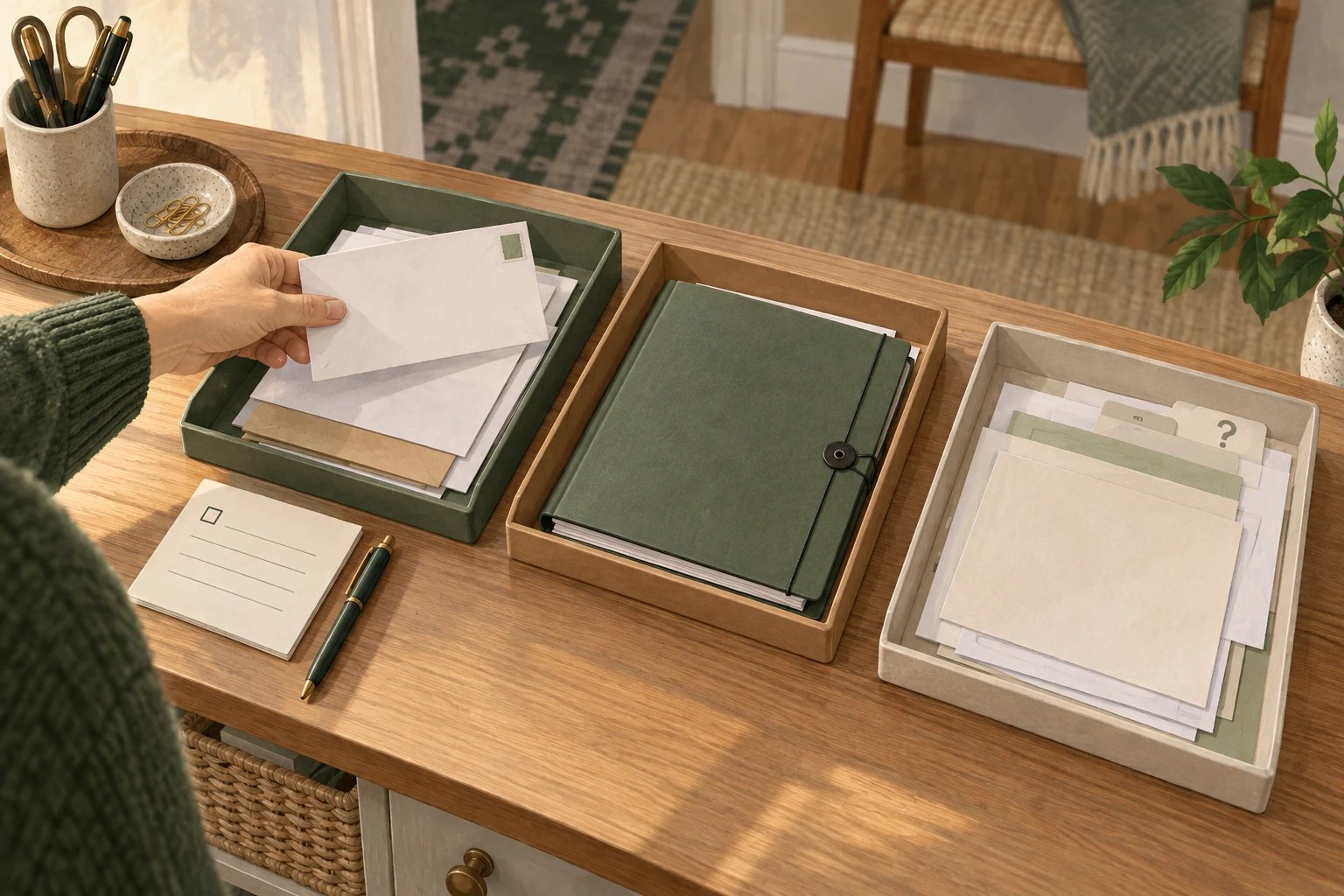
Check the recipient and sender first
Before opening an envelope, check whether it is addressed to you or someone in your household and whether you recognize the sender. Do not open mail addressed to another person. Set it aside and ask the postal service how to handle it. Confirm the sender even when an item looks like advertising.
Use four holding places
| Group | Examples | Next step |
|---|---|---|
| Deadline | Payment dates, application cutoffs, renewals | Record the date and action. Keep the original by deadline. |
| Reply or task | Forms, appointments, questions to answer | Write who will do what and by when. |
| Keep | Receipts or contract papers needed for later reference | Note why it is kept and file it with related papers. |
| No current use | Unaddressed ads or notices already checked | Check for personal information before disposal. |
Examples for common mail
For a bill, check the due date and whether payment is automatic. Even with automatic payment, note when you need to review the amount if that matters to you. For an event flyer, decide by what date you will make a choice. Once decided, discard it if you have no reason to retain it. Keep warranty or contract papers where you can match them to the product or agreement. Follow the document and contract terms rather than assuming one storage period applies to everything.
Protect personal information
Before recycling or discarding paper, look for names, addresses, account numbers, and membership details. Follow local disposal rules. If you shred documents, avoid leaving easily reassembled strips. Keep official notices in the deadline or keep group until you confirm whether a response or retention is required.
When you cannot finish today
Put unreviewed items in one tray or envelope and label it “not reviewed” with the next review date. Pull out items with deadlines first. One fixed place makes it easier to find what remains than several temporary piles.
A short follow-up note
Record four details: document, next action, deadline, and filing place. For example, “renewal notice / check terms / end of November / blue contract folder.” The note should tell you what to do without reopening the paper. When sharing a note containing personal details, check who needs access and what they need to see.
The goal is not to process every page at once. Separating deadlines, reasons to keep, and conditions for disposal makes the next decision easier to handle.