Make one useful decision
Changing Bags Without Leaving Essentials Behind
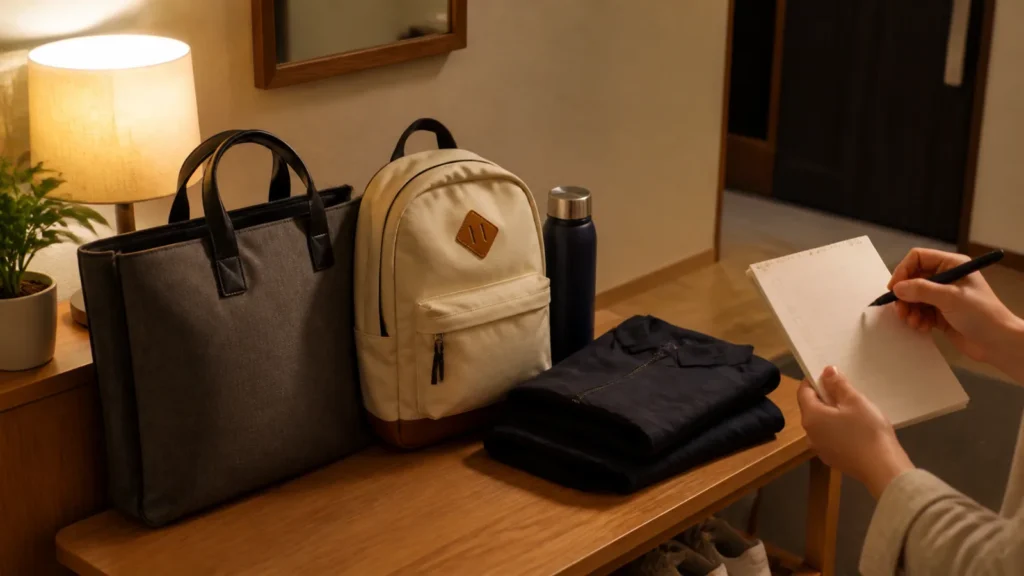
When changing bags, separate items already moved, items for this outing, and items still elsewhere. An empty old bag does not establish that the next outing is ready. Finish by checking the actual items in the new bag.
Choose the next outing first
Before transferring yesterday’s contents, identify the next activity. Distinguish your regular keys, wallet, glasses, or other essentials from a collection receipt or other one-off requirement. Agree before moving another person’s belongings, and preserve normal arrangements for medicines and valuables.
A fictional change from a work bag to a smaller weekend bag
This is an invented organizing example, not a tested household result or a universal five-item packing list. The person is going to collect something and has established that they need the receipt.
| Item and original location | State after transfer |
|---|---|
| House keys Inner pocket of work bag | In the weekend bag’s inner pocket; physically checked |
| Wallet Main compartment of work bag | Moved and checked that it can be retrieved |
| Collection receipt Action tray on the desk | Added for this outing |
| Phone Charging on the desk | Not packed: “add from desk before departure” |
| Work notebook Outer pocket of work bag | Not needed today; returned to its work area |
The phone is still unpacked, so preparation remains unfinished even if the old bag is empty. Change that item to complete only after actually adding it. Check the issuer’s requirements for any document or receipt you need; this example does not establish which format is accepted.
Write the location and action for anything still in use
“Phone—charging on desk—add before departure” gives a recoverable next step. Keep this unfinished note where you normally check before leaving. Writing an item down does not mean it is inside the bag.
If plans change, review the outing-specific items. Removing an unnecessary receipt need not disturb the regular set. Separating these groups makes it clearer which part of the packing decision has changed.
Check both bags, including separate pouches
Check the old bag’s inside pockets, outside pockets, and separate pouches. Return items staying home to their appropriate destinations rather than making the unused bag another holding box. Check that the new bag closes and that you can retrieve essential items. If they do not fit, review the contents or bag instead of forcing them in.
Copy a bag-transfer note
Next outing: ______
Regular items physically packed: ______
Outing-specific items physically packed: ______
Not packed / current location / when to add: ______
Items staying home / returned location: ______
Old bag pockets checked: ______
Before leaving, compare unfinished entries with the actual items. Use the paper or digital notes you already review; another app is unnecessary.
For a wider morning routine, see night-before preparation. For the separate question of how many shopping bags to keep, use the reusable-bag worked example.