Make one useful decision
Keep Spare Buttons Identifiable by Garment
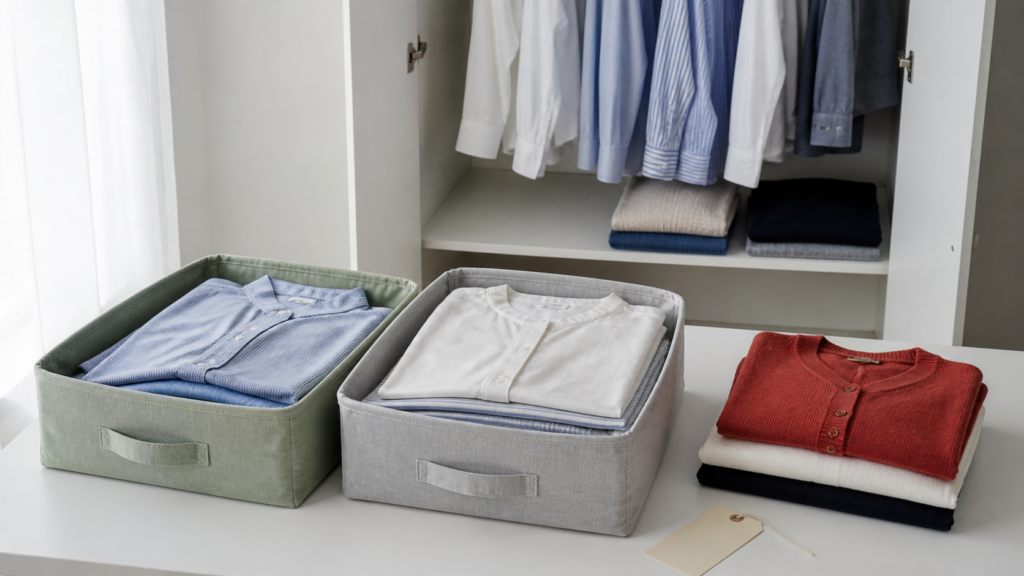
Before sorting spare buttons by colour, keep a route back to the garment they fit. Review the accessory when the garment leaves the household.
Leave an identifying clue
Note enough about the garment and owner to recognize it. An existing small bag with a short label may be sufficient; detailed purchase or personal information is unnecessary.
Separate repair reserves from craft materials
Keep repair buttons matched to current clothes. If you genuinely use others for crafts, give them a real purpose and defined space instead of treating every button as an indefinite resource.
Store small parts safely
Use suitable closed storage away from children and pets. Keep needles and cutting tools appropriately managed, not hidden inside loose button bags.
Match similar spare buttons to actual garments
Imagine spare buttons from a white shirt, a navy cardigan, and a garment you no longer own. Sorting only by colour will not distinguish different white button sizes. Compare alongside the garment without modifying it.
| Item or stage | Decision and next action |
|---|---|
| Candidate for white shirt | Compare size, thickness, and hole or shank form, not only colour. Leave uncertain matches unresolved. |
| Verified navy cardigan spare | Label it with identifying details such as navy, round neck, and owner. |
| Garment no longer owned | There is no current repair target; assess any specific craft use separately. |
| Passing on a garment | Offer verified matching spares with it if the recipient wants them. |
What changes the decision?
Visual matching does not establish repair strength or comfort after sewing. Take the garment and candidates to an appropriate repair service when the fastening or match is uncertain. Store small parts in a closed container and keep needles separately identifiable.
A completed note to adapt
Verified: navy round-neck cardigan, owner identified
Pending: compare two white-shirt candidates with the garment
No current garment: assess a specific craft use separately
Replace these items with your own. Leave unresolved checks visible; do not mark a task complete merely because a note has been written.
For the related next step, see Where to Put Clothes You Have Worn Once and Plan to Wear Again. Choose the guidance that fits the task actually remaining.