Make one useful decision
Unpacking After a Trip: What to Handle Now and What Can Wait
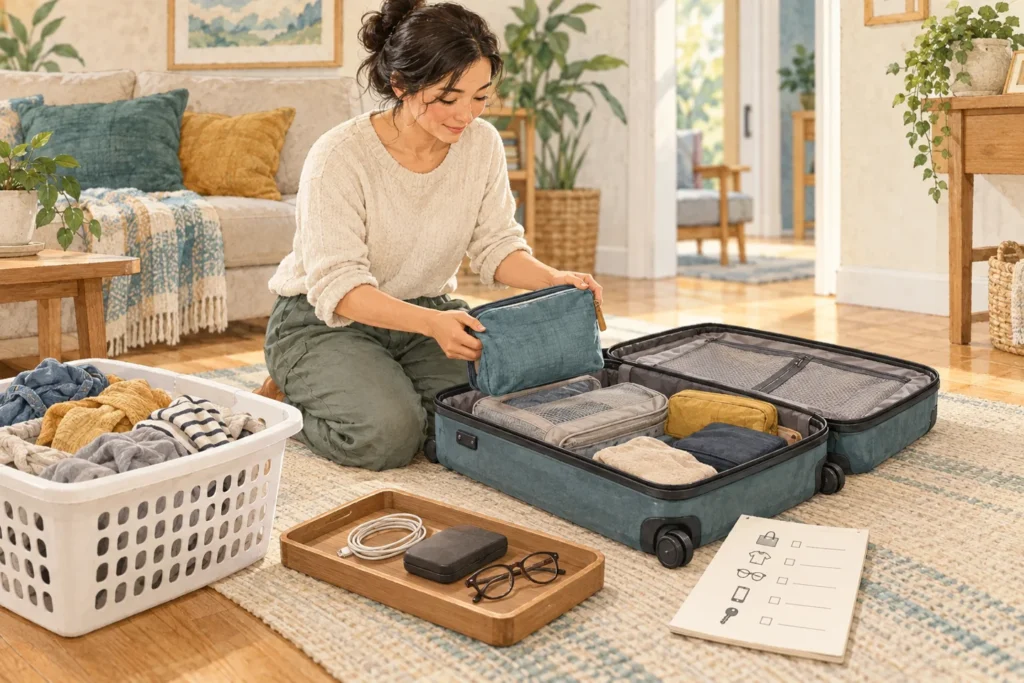
After a trip, start by taking out food, damp items, and things you need for everyday life. Then deal with dry travel supplies and luggage care. You can decide where to stop on a tiring evening without treating every unpacking task as equally urgent.
This guide is for returning home from a trip or family visit. It does not require a new storage system or finishing every load of laundry that night. Follow the storage conditions for the contents and the care instructions for your own clothes and bags.
Choose one unpacking spot first
Put the bag somewhere that does not obstruct a doorway or walking route, including if you pause halfway through. Take items out one at a time rather than spreading the entire contents through several rooms. Keep dirt on the outside of luggage away from bedding and clean clothes.
If several people's belongings share a case, first check for contents that need attention rather than sorting everything by owner. Do not silently change where someone keeps their valuables or personal essentials; hand them over or agree where they are going.
Take out three kinds of contents on the day you return
1. Food and drinks that need a storage check
Remove edible gifts and leftover drinks from the bags and check their storage instructions and the conditions in which they travelled. Do not assume something is safe to eat from its appearance or smell if its storage history is unclear. Taking it out of the bag and deciding whether it is suitable to eat are different decisions.
Arranging gift bags and wrapping can wait while you deal with contents that need attention. Use the product's own conditions; this guide does not set a universal safe travel time or temperature.
2. Damp belongings, kept apart from dry items
Do not leave wet towels, swimwear, or rainwear sealed in a bag for storage. Move them to a suitable place for the treatment and drying required by their instructions, without wetting the floor or other belongings.
Take laundry out of the travel bag too. Check what is unused, what is damp or dirty, and how each item should be cared for before combining it with routine washing. Everything packed for the trip does not automatically need the same wash. Removing a wet item from its bag also does not mean any necessary cleaning is finished.
3. Items you need for the next ordinary day
Check glasses, charging equipment, keys, regular washroom supplies, and documents needed for the next outing. Separate everyday items from travel-only spares and return the everyday ones to their usual places so tomorrow does not start with searching through pouches.
Return medicines and other personal essentials to their normal, instructed storage arrangements; do not repackage their contents for convenience. Gather receipts and papers in one known place, with any remaining review task recorded.
On a late night, stop when the remaining work is clear
You need not finish all washing, folding, and storage before resting. Before pausing, check these conditions:
- Food and drinks have been checked and given the storage or other attention they need.
- Damp items are out and their necessary care is being addressed.
- Tomorrow's essentials are in places the users can find.
- You know what remains and who will do the next step.
- The bags do not block a route, and their remaining contents are suitable to leave in that state.
Keep the remaining dry travel supplies in one place rather than distributing unfinished piles across rooms. Choose an actual opportunity to finish them. Packing something into a cupboard merely to hide it does not complete its care.
Next, put travel supplies away and check the empty bag
Return dry pouches and travel-only items to their usual storage. If a consumable is running low, check whether you need it before the next trip and whether you already have a suitable replacement at home. Add only the needed purchase to your existing list. The household inventory guide helps separate a restock trigger from an instruction to buy more automatically.
Check every pocket and compartment before treating a suitcase as empty. Look for remaining clothes, papers, or leaked washroom products. Use the care instructions for that particular bag and confirm that it is dry before closing it for storage.
As a manufacturer example, Samsonite's product-care guidance includes drying before storage and different instructions for components. It is not a universal cleaning recipe for every bag. Do not assume machine washing or a cleaning product is suitable without checking your own model's instructions.
When sharing the work, state the finish point
“Help unpack” can mean taking clothes out, sorting them, or putting them away. Give one person a task such as checking their own used and unused clothing, and another the job of returning shared everyday items. Washing and luggage care can be separate jobs with separate owners.
Choose a manageable contribution rather than making one person recheck everyone's belongings. Children can help within their abilities, with adults retaining decisions about valuables and care needs. For agreeing what counts as finished, use the household chore-chart guide.
A late-return example
This is a fictional sequence, not a measured completion time.
On arrival: check food and damp contents; return everyday glasses and charging equipment. Check laundry and take it to its normal handling area.
Before pausing: gather only the remaining dry travel supplies in one place. Record “A will put pouches away before tomorrow's evening meal; B will check and care for the empty case.”
Next day: finish storage and the required care, then return the dry case to its assigned place.
If washing or drying is still unfinished, keep that task visible separately. A suitcase being out of sight does not mean all unpacking work is complete.
A short note for unfinished unpacking
Contents needing attention now / action taken:
Tomorrow's essentials / where returned:
Work still remaining:
Next person and opportunity:
Case emptied / cared for / dryness checked:
One thing to change for the next trip:
These checkboxes are temporary reminders in this view. Keep your actual task note in your usual place.
If the next morning is busy, the night-before preparation guide can help identify what needs to be ready before you stop. Adapt the sequence to your contents and circumstances rather than filling every available moment with chores.
Manufacturer information checked 28 October 2026. The illustration shows a possible sorting arrangement; it is not a tested claim about speed or results.