Make one useful decision
Avoid Forgotten Email Replies: Drafts, Your Actions, and Waiting
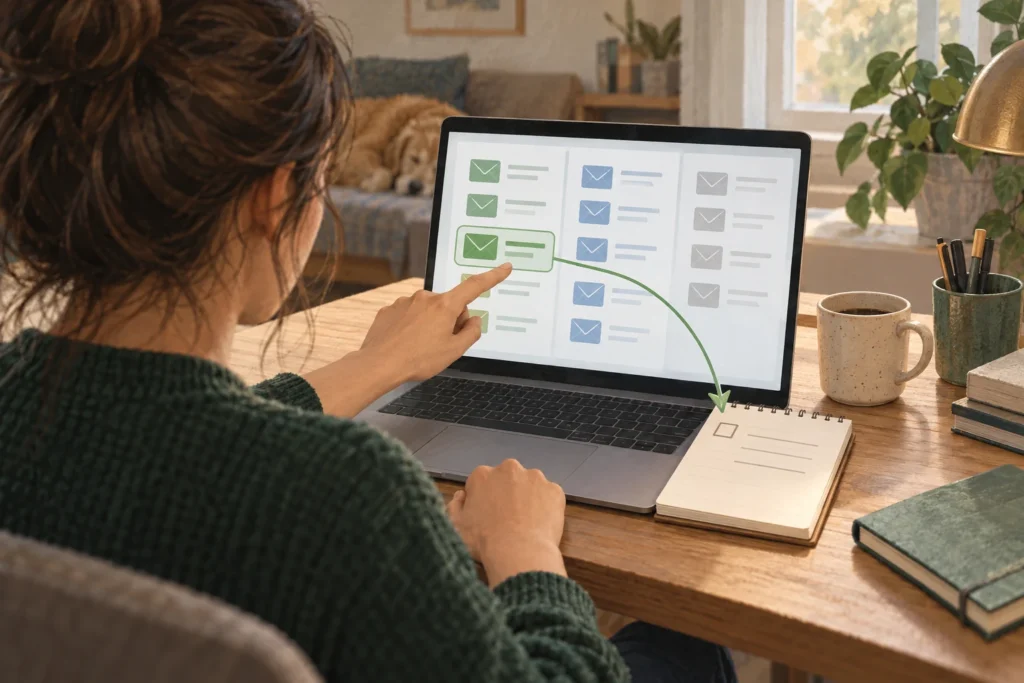
Read and unread are not enough to track replies. Separate what you need to send, what you must check before replying, and responses you are waiting for.
First decide whether you owe a reply
Check the recipients, request, deadline, and any answers already in the conversation. An announcement does not automatically become another reply task. In a group message, identify what you personally need to answer.
Use the actual request or agreement for the deadline. A universal rule such as replying to every message within a fixed number of hours may not fit its importance or the work needed. Record your work opportunity separately from the stated deadline.
Keep three kinds of unfinished work distinct
- Your reply
- You have the information and need to compose and send it.
- Your check first
- You need to ask another person, consult a document, or complete another step before answering.
- Their reply
- You have sent your message and need the other person's answer for the next decision.
Use existing flags or labels, or a small paper note. Choose one place you already review rather than adding another app. Include enough subject and date information to find the original message.
A draft is not a sent reply
Writing the answer can feel like completion even when it remains unsent. After sending, check the sent folder or conversation. Look separately for an error or a message still waiting to send.
If you are unsure whether you replied, inspect the sent history before sending again. Check the recipients and attachment contents before sending, too. A second near-identical answer is not a substitute for checking what happened.
Turn “reply later” into a next step
Fictional example:
Message: proposed visit dates
Current state: checking another household member's availability
Next action: ask after arriving home, then reply
Deadline: copied from the original message
After sending: verify it is sent; move to waiting if an answer is needed
Record the missing piece of information, not just the word “pending”. If a waiting reply needs later review, choose an appropriate opportunity based on the actual arrangement. Do not treat every unanswered message as a reason to chase immediately.
Review actions, not only the inbox
An empty inbox is not enough if unfinished work is buried in another folder. At a normal email-checking opportunity, look at your reply and checking tasks. Remove completed actions from the work list while retaining any messages needed as records.
Reply action note
How to find the message:
My reply / my check / their reply:
Next action:
Actual deadline / planned work opportunity:
Sent confirmation / what I am waiting for:
Do not copy passwords or unnecessary private information into the note.
For a longer conversation, use the action-items guide to distinguish decisions from work still assigned to someone. For planning tomorrow's check, see night-before preparation.