Make one useful decision
Keep Everyday Shoes Accessible Without Filling the Entrance
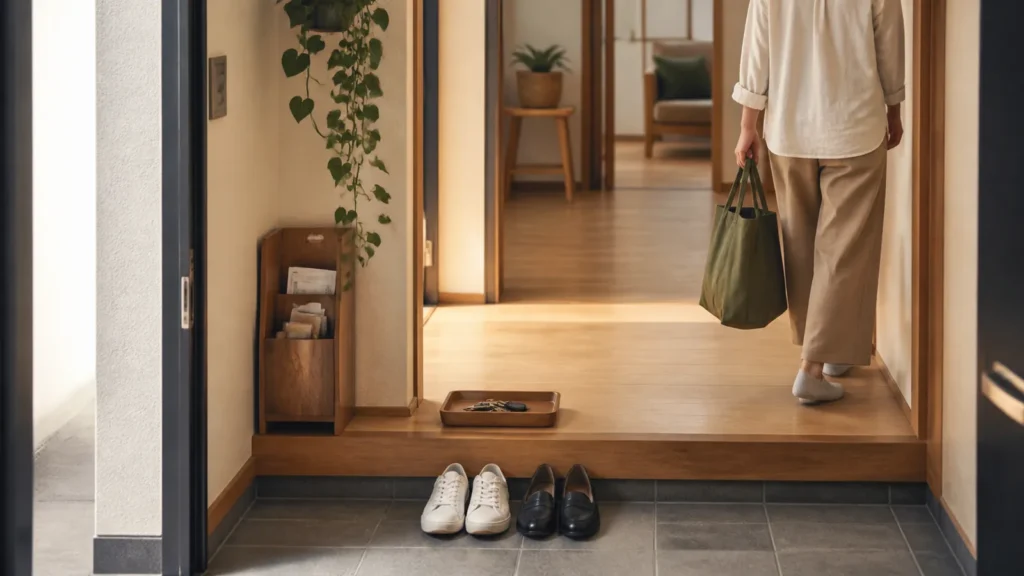
Choose entrance shoes by upcoming use and care needs, rather than leaving the whole collection near the door. Keep access clear even when a pair cannot yet be put away.
Check upcoming uses
Identify everyday, work, or activity shoes actually needed soon. Household members need not share one identical one-pair rule. Agree before moving another person’s shoes into less accessible storage.
Separate care from ready storage
Follow the footwear’s instructions for wetness, dirt, and drying. Do not enclose damp shoes merely to make the entrance look tidy. A temporary care area must also leave safe access.
Define the return point
Choose what condition must be checked before returning shoes to storage. If the cupboard is full, review its contents with the owners instead of forcing another pair inside.
Separate departure shoes, care in progress, and storage
Suppose one person has three pairs out: work shoes, a rain-wet pair, and trainers used at the weekend. The fictional goal is to restore usable circulation and a workable departure routine, not to enforce a universal one-pair rule.
| Item or stage | Decision and next action |
|---|---|
| Work pair for tomorrow | Check condition and keep identifiable for departure. |
| Wet pair | Follow material and product care guidance; use a temporary place clear of circulation and set a later condition check. |
| Weekend trainers | Check dirt and dryness, then return to the owner’s storage if ready. |
| Storage is full | Do not force damp shoes in; review stored contents with their owner. |
What changes the decision?
The return trigger is a suitable actual condition, not merely the arrival of evening. If the pair is still wet in the morning, check an available alternative rather than using improvised heating. Review another person’s shoes with that owner before moving or discarding them.
A completed note to adapt
Tomorrow: select work pair
Care in progress: wet pair / check condition later
Storage: return trainers when ready
Circulation: keep door movement and walking route clear
Replace these items with your own. Leave unresolved checks visible; do not mark a task complete merely because a note has been written.
For the related next step, see Where to Start Decluttering: One Small Area and a Clear Stopping Point. Choose the guidance that fits the task actually remaining.