Make one useful decision
Choose a Reliable Return Place for Your Keys
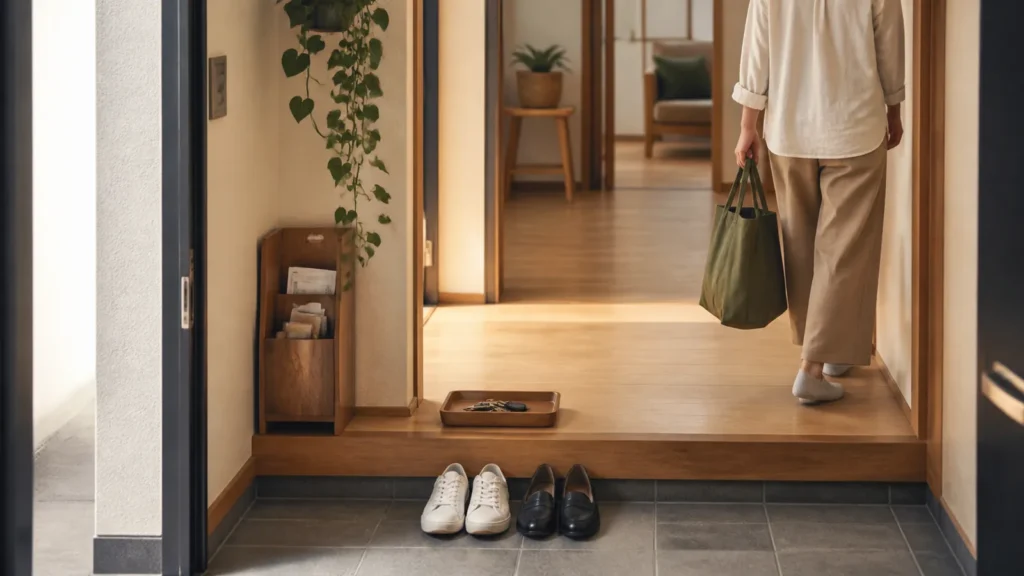
Choose a return place that fits what you do after arriving home. Everyday keys, other people’s keys, and reserves should remain identifiable.
Follow the arrival routine
Notice whether keys go back in a bag or stay in clothing. Choose one practical return point, considering security and whether keys could be seen or reached from outside.
Distinguish working keys from reserves
Agree with the relevant people how reserves are managed. Do not assume every key should travel together. Avoid identifying labels that unnecessarily reveal the home address if the keys are lost.
Review exceptions
Try the arrangement and note when it fails: a different bag, extra parcels, or another routine. Adjust for that condition and tell other users before moving the shared location.
An example and a stopping point
In a fictional example, the wallet goes to a desk but keys remain in a coat. The owner links putting keys away to finishing the arrival routine and checks the actual keys before leaving. Test the action before buying a tray. If keys are lost, seek the relevant property manager’s or authorized service’s guidance; a storage article cannot settle the appropriate response.
A note for your own situation
User:
Everyday keys:
Return action:
Security check:
Exception to review:
Keep this with the paper or digital notes you already use. No additional app is required.
For the related next step, see Night-Before Preparation: What to Pack Now and What to Add in the Morning. Choose the guidance that fits the task actually remaining.