Make one useful decision
Small Bathroom Storage: Arrange Supplies Around the Way You Use Them
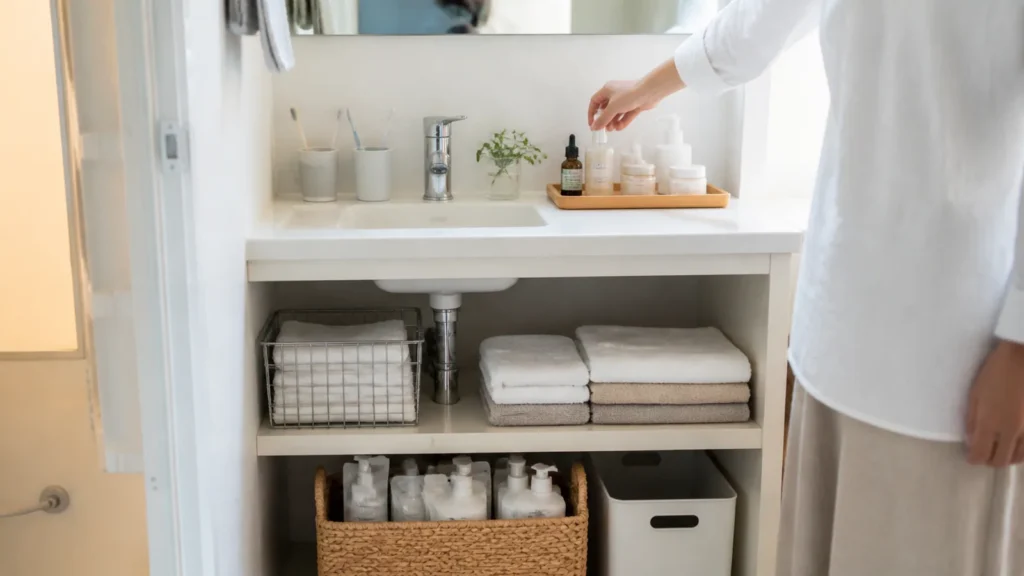
A small bathroom can have empty shelf space and still be difficult to use. The problem may be a person standing in front of a cupboard, wet items without a drying place, or spare stock hiding the product you need.
Start with one shelf or one person's routine. This guide adapts our Japanese bathroom-storage article; layouts and household routines vary, so treat the arrangement below as an example to test.
Find the movement that gets blocked
- Another item is in the way: separate the product in use from unopened replacements.
- Another person blocks the cupboard: reconsider timing or a portable personal kit.
- A wet item cannot be put away: decide its appropriate drying place before adding storage.
- Laundry blocks the route: investigate the laundry process separately from toiletries.
Separate the three routines
Washing and brushing need access to water. Grooming may mainly need a mirror. Laundry needs its own supplies and a clear route. Storing everything beside the sink because it is all “bathroom stuff” can make these routines compete.
| Use | What to check |
|---|---|
| Daily washing | Can the person reach the current product without obstructing the sink? |
| Personal grooming | Could existing supplies travel in a small kit to another suitable mirror? |
| After a bath or shower | Can clean towels be kept dry and separate from used wet items? |
| Laundry | Are products stored according to their labels, without obstructing movement? |
| Replacement stock | Can you count it without moving the products in daily use? |
Convenient access does not justify moving cleaners or sharp objects within children's reach. Follow product instructions for electrical appliances, including use and storage around water and heat. Give wet items the drying and cleaning arrangements specified for them.
Example: two adults sharing one sink and mirror
This is an illustrative layout, not a household trial. Keep only the currently used shared washing supplies by the sink, leaving the area usable and cleanable. Put each person's grooming products in an existing small container on an accessible shelf. Keep unopened replacements in a separate suitable storage location.
One person might take their kit to another suitable mirror while the other uses the sink. If there is no alternative place, stagger the routine instead. Reject a layout that leaves containers on the floor or blocks a walkway. A new divider will not fix a cupboard door blocked by someone standing in front of it.
Measure the movement, not only the shelf
- Open doors and drawers fully: can the container actually come out?
- Leave access to plumbing, shut-off valves, and inspection points.
- Check the room needed to grip and lift a bottle.
- For installed storage, check fixing instructions, load limits, and the property's rules.
A container that fits the width may still prevent the door closing. Try the footprint with something you already have before buying, but do not leave unsuitable temporary boxes in wet areas or near appliances.
Try the layout tomorrow morning
Blocked action: ____________________
One location to change: ____________________
What I will check next time: ____________________
If the item is easy to take but difficult to return, adjust the return location. If spare products keep filling the shelf, use the inventory guide's restock trigger and storage limit. The same movement-first approach can help with a cramped kitchen workspace.
If laundry bags are taking up the workspace, first decide which ones have a specific use. The mesh laundry-bag guide helps you match a bag to a garment and distinguish a separate bag from a separate wash.