Make one useful decision
Unopened Mail Piling Up? Separate Opening, Action, and Storage
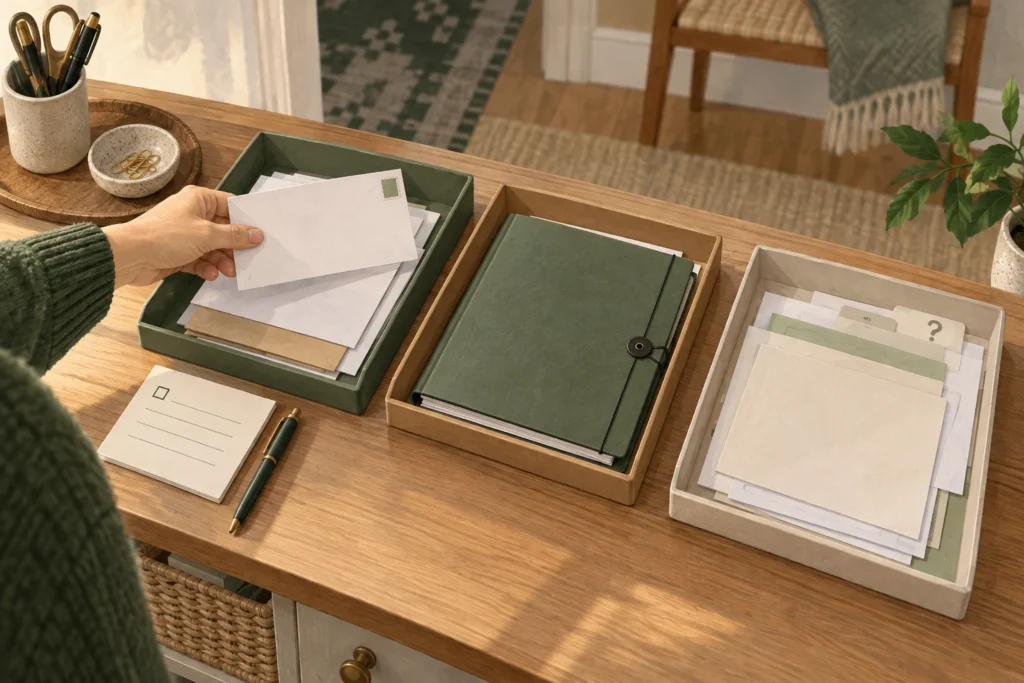
Opening an envelope does not finish the task inside it. Separate mail that is unread, mail that needs action, and papers that only need to be kept.
Check whose mail it is
Read the addressee and sender first. Separate your own mail, items to hand to someone else, and possible misdeliveries. Agree how shared-household mail is handled rather than automatically opening another person's letters. For a misdelivery, check the delivery provider's instructions.
An official-looking envelope or the word “important” does not establish authenticity. Verify an unexpected demand through contact details you already know are genuine before paying or sharing information.
Read one complete item at a time
Take out all the contents, including inserts, and check the back of pages. Identify whether a reply, payment, appointment, or other task is actually required. Read the stated deadline and any conditions; do not invent one from the envelope's appearance.
Advertising can arrive with a useful notice. Check the contents before treating everything from a familiar sender as disposable.
Write the next action, not just “important”
A useful note says what happens next: “ask the account holder to check the details, then reply” or “verify the unexplained charge through the official contact”. Record the deadline as written and separately choose a time to do the work.
Fictional example:
Item: booking confirmation request
Next action: agree a date with the other person, then reply
Deadline: copied from the notice
Owner / next opportunity: A / after arriving home
Original: action tray on the desk
Keep the paper's location with the action. A calendar entry is less useful if the original cannot be found. After replying, check whether a record of what was sent should be retained before moving the item out of pending work.
Keep an envelope when it contains needed information
Keep it with the contents if the sender's details, reference information, or delivery information still matter. Do not discard possible evidence for an unresolved matter before you know what is needed. Retention requirements depend on the document and jurisdiction; there is no universal keep-for period here.
When you decide paper is unnecessary, dispose of names, addresses, and identifying numbers appropriately rather than putting them openly into shared recycling.
Make unread and action-needed visibly different
Use separate existing trays or a simple divider. “Unread” means the task is still unknown; “action” means you have read it and identified what remains. If unread mail fills its space, set aside a real opportunity to open it before buying more storage.
With a backlog, finish deciding where one opened item goes before moving to another. If you must pause while checking something, leave a note stating the unanswered question. Do not bury it among completed papers.
Mail action card
Mail item / addressee:
Next action:
Deadline and conditions as stated:
Person / next work opportunity:
Original location:
Completion or confirmation still needed:
If a form must go back, use the form-return checklist to distinguish filling it in from handing it over. For a date that needs agreement, the night-before preparation guide helps turn a reminder into something ready for the next day.