Make one useful decision
When Can You Throw Away Appliance Boxes? A Keep-or-Recycle Checklist
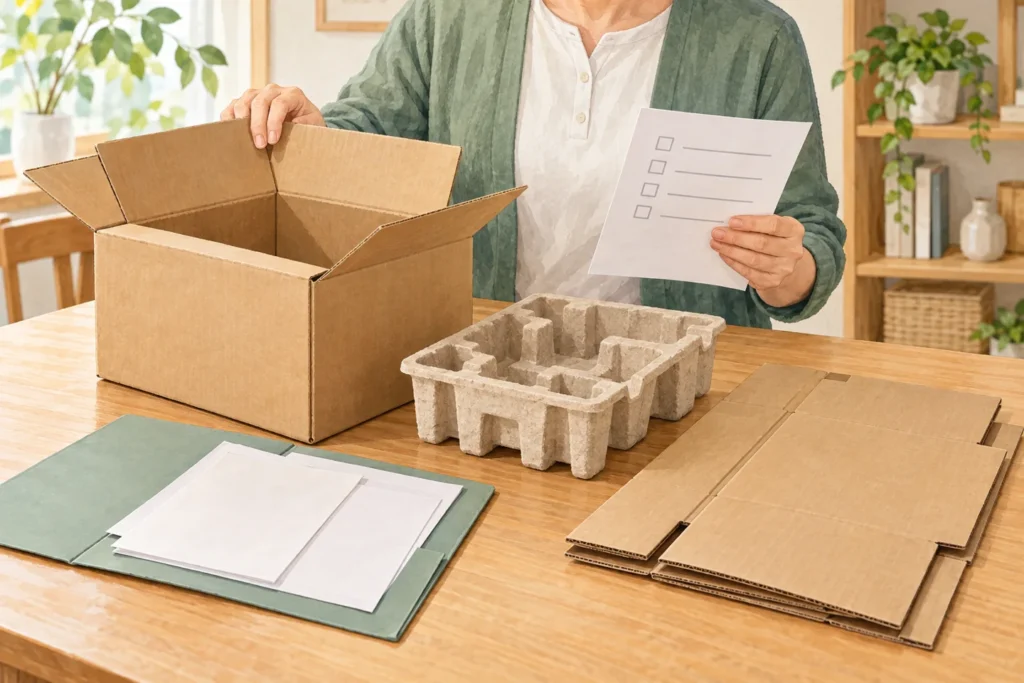
When can you throw away an appliance box? First check whether it has a specific job: a possible return or exchange, a repair shipment, storage for the appliance, or a planned move or sale. There is no useful universal rule that every box must stay for one month or until a warranty ends.
If you have just bought the product and have not checked the conditions, keep the packaging intact temporarily. Decide separately what to do with warranty documents, proof of purchase, manuals, and accessories.
A keep-or-recycle decision table
| Your situation | Check before discarding | What to do next |
|---|---|---|
| Recently bought, or a fault is being discussed | The seller's return or exchange conditions and packaging requirements | Keep the carton and fitted inserts together until the instructions are clear |
| You are keeping it for a possible repair | The service for your product, required packaging, collection options, and whether packaging comes back | Keep what the confirmed process needs; record any unanswered question |
| The appliance goes back in its box seasonally | Whether the appliance and accessories fit and the product's storage instructions are met | Keep it if it functions as useful storage |
| You have a planned move or sale | Timing, transport or handover conditions, and available space | Keep it with a specific purpose and review point |
| No identified use remains after these checks | Hidden accessories, documents, material, and local collection rules | Consider letting it go; do not treat a date alone as an instruction to discard |
Do not move a heavy appliance or disconnect equipment just to test whether it fits the box. Keep stored packaging clear of walkways, doors, and spaces the appliance needs around it.
For a recent purchase, check conditions as well as dates
Being within a return period does not necessarily mean an opened product is accepted. A change-of-mind return and a faulty-product case may follow different procedures. Check your order record and the seller's official instructions for:
- Opened, unopened, used, or unused condition requirements.
- Original packaging, manuals, accessories, and other included items.
- Whether you must contact the seller first, and what deadline applies.
- Whether a shipping label may go on the product box or an outer carton is needed.
As a Japanese example, Yodobashi.com's published guidance separates different return situations and asks customers to contact it first. This does not establish the rules for your retailer or country. Keeping a box alone does not establish return eligibility. If you suspect a fault, resolve that question with the appropriate seller or manufacturer before reorganizing the packaging.
For repairs, look up the process for the actual product
A self-shipped repair, a collection service, and an in-home visit can require different preparation. Do not assume that every repair needs the original carton—or that any box of the right size is protective enough.
For example, Panasonic's Japanese mail-in repair instructions describe a cardboard box that fits the repair item and included accessories, with suitable protection. They also say shipping boxes and cushioning are discarded when unpacked. Packaging you send may therefore not be returned.
This is an example of that particular Japanese service, not an international instruction for all Panasonic products. Use the current service instructions for your model and location, including which accessories to send and any preparation required for appliances that hold liquids. Ask whether original packaging is required, provided, replaceable, or returned.
Separate the empty box from the items you still need
- Remove purchase records and warranty documents. Store them where you can identify the product and retrieve them.
- Check beneath dividers and inside small cartons for spare parts, fittings, or dedicated tools. Look up unfamiliar parts before discarding them.
- If needed product information appears only on the packaging, check it against the appliance or documents and record it. Do not publish personal details or activation codes in a photo.
- If you need fitted protective inserts, plan storage for the complete set rather than keeping an empty outer carton alone.
Do not make “discard the box” mean “discard all the paperwork.” Documents and packaging can have different retention needs.
Give a box you keep a reason and a next check
This is an illustrative note, not a tested storage result:
Small-appliance box
Reason: I am discussing a possible fault with the seller.
Keep together: fitted inserts and inner cartons. Purchase records have moved to the document folder.
Location: one shelf compartment.
Next check: when the seller replies, confirm the required packaging and return procedure. After the case ends, review any remaining storage use.
If you keep a box for resale, identify an actual plan rather than assuming original packaging guarantees a higher price. Compare its possible use with the space and effort it takes. Check local collection rules for the carton, plastic, foam, and other inserts before disposal; they may need different handling.
Five-line appliance-box checklist
Copy onto paper or print this page. Checkboxes are temporary and reset on reload.
- Product and model: __________
- Purpose: return or exchange / repair shipment / appliance storage / planned move or sale / other
- Official instructions or contact to check: __________
- Where documents and accessories go / packaging to retain: __________
- Box location and next review opportunity: __________
For a wider sorting session, use the one-area plan and restart note. Ordinary paper shopping bags need a different quantity decision: the paper-bag guide helps match useful sizes to storage space.
Official information checked 2026-10-24. Policies vary by retailer, manufacturer, product, and location. This is a storage decision guide, not a guarantee of return eligibility, warranty coverage, shipping protection, or resale value.